Parametric Auto Payout Triggers Dispute Over GPS Speed Log Calibration
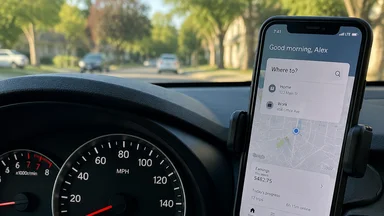
In early 2026, a ride-share driver in Texas received a notice that her parametric auto insurance policy would not pay out after a GPS log recorded her vehicle traveling at 120 km/h in an 80 km/h zone. The policy, which triggers a fixed payout when speed exceeds a preset threshold, was designed to settle claims in days without adjuster involvement. But the driver claims the device was wrong—a sensor glitch, not lead-foot driving. The insurer says the device is tamper-proof and the data is irrefutable. The dispute, now before the state Department of Insurance, highlights a growing friction point in parametric auto insurance: who verifies the black box?
When a GPS Glitch Becomes a Coverage Fight
Parametric auto policies are simple in concept: if a defined event occurs—speed above a threshold, driving in a restricted zone, or exceeding a time limit—the policy pays a fixed amount. No adjuster, no loss assessment, no negotiation. The promise is speed and certainty. But when the trigger data is contested, the simplicity becomes a liability.
In this case, the policyholder, a 34-year-old ride-share driver, says she was driving normally on a highway when the GPS log recorded a brief spike to 120 km/h. She insists she never exceeded 90 km/h. Her vehicle's onboard diagnostics (OBD) port, which feeds data to the insurer's telematics device, showed no corresponding engine RPM spike. But the GPS log is the sole trigger.
The insurer's policy wording defines the GPS speed log as "irrefutable evidence" for payout decisions. The device is sealed and tamper-proof, the insurer argues, so the data must be accurate. The driver's attorney counters that GPS accuracy is not absolute, especially in urban canyons or under heavy cloud cover. No independent calibration test was performed before the device was installed.
The dispute has drawn attention from consumer advocates and telematics vendors alike. At stake is not just this single claim, but the broader credibility of parametric triggers in auto insurance. If a policyholder can successfully challenge the data, insurers may need to rethink how they define "irrefutable."
How Parametric Triggers Eliminate Adjuster Discretion
Parametric insurance originated in catastrophe bonds and weather derivatives, where payouts are triggered by objective indices like wind speed or rainfall. Auto insurers have adapted the model for telematics-based policies, using GPS speed, location, and time data to automate claims. The appeal is obvious: claims can be settled in days, not weeks, and fraud opportunities shrink because the trigger is data, not human judgment.
But the same feature that eliminates adjuster discretion also eliminates the possibility of a human override when the data is wrong. In traditional auto insurance, a policyholder can explain a speeding ticket or a minor accident to an adjuster, who may consider context. In a parametric policy, the data speaks—and if it says you were speeding, the payout is denied.
Insurers argue that this trade-off is worth it. Parametric policies typically offer lower premiums because the insurer's administrative costs are lower and fraud is reduced. Policyholders accept the risk that a data error could cost them. But the ride-share driver's case suggests that many policyholders do not fully understand the terms until a dispute arises.
The policy wording is critical. Some parametric auto policies include a clause allowing the insurer to audit the device's calibration if a dispute arises. Others, like the one in this case, treat the data as final. Consumer advocates say that such clauses should be mandatory, not optional, and that policyholders should have a right to challenge the data.
The Speed Log Calibration Gap
GPS accuracy varies widely depending on hardware, satellite geometry, atmospheric conditions, and signal multipath from buildings. Consumer-grade GPS receivers, like those used in many telematics devices, typically have a horizontal accuracy of 3 to 5 meters under open sky. But speed accuracy is derived from position changes over time, and errors can compound.
A 2023 study by the University of Michigan found that consumer GPS units used in telematics had a median speed error of 2.5 km/h at highway speeds, but the error ranged up to 15 km/h in some conditions. The study tested devices from three major telematics vendors and found no consistent calibration standard.
Unlike aircraft GPS, which must meet FAA standards, or maritime GPS, which follows IMO guidelines, there is no ISO or SAE standard for telematics device calibration in auto insurance. Manufacturers self-certify their devices, and state insurance regulators have no testing protocols to verify accuracy.
Some insurers argue that the lack of a standard is not a problem because the devices are consistent across their fleet—if one device reads high, they all read high, so relative comparisons are valid. But for parametric triggers that rely on absolute thresholds, a 10% speed error can mean the difference between a payout and a denial.
Case in Point: Ride-Share Drivers Challenge Payout Denials
The Texas case is not isolated. In the first quarter of 2026, six ride-share drivers insured under the same parametric fleet policy filed complaints with the state DOI after their claims were denied for alleged speeding. All six drivers say they were not speeding, and all six point to the same device model—a popular OBD-plug telematics unit sold by a major vendor.
The drivers' attorney has requested the device manufacturer release calibration logs for the specific units. The manufacturer has refused, citing trade secrets. The insurer has offered to settle the claims for half the policy amount, but the drivers want a full payout and a change to the policy terms.
The policy includes an arbitration clause that keeps disputes out of court. The arbitration panel will have to decide whether the GPS speed log meets the legal standard of "reliable evidence" under Texas insurance law. If the panel rules against the insurer, it could set a precedent for other parametric auto disputes.
Industry observers say the case is a test of how far parametric auto insurance can go before regulators step in. "If insurers want to use data as a hammer, they need to ensure the data is accurate," said a former state insurance commissioner who spoke on condition of anonymity. "Otherwise, the whole model breaks down."
Insurtech's Hard Sell: Trust the Black Box
Telematics-based auto insurance has been marketed as a win-win: safer drivers get lower premiums, and insurers get better risk data. But the black box that collects the data is often opaque to the policyholder. Drivers cannot see the raw speed logs, and they cannot verify the device's accuracy. Trust is the product, and it is fragile.
Similar friction has emerged in European black-box auto insurance, where devices record speed, braking, and cornering. In the UK, the Financial Ombudsman Service has handled dozens of complaints from policyholders who disputed telematics data. In several cases, the ombudsman ruled in favor of the policyholder when the insurer could not prove the device was accurate.
Consumer advocates in the US are pushing for a right to audit device data. They argue that policyholders should be able to request a third-party calibration test at the insurer's expense if a dispute arises. Insurers resist, saying that opening the device to inspection could compromise its tamper-proof design.
The tension is not new. In the early days of credit-based insurance scoring, consumers objected to opaque algorithms that affected their premiums. Regulators eventually required insurers to disclose the factors used. A similar dynamic may play out for telematics data.
Regulators Start to Prod the Data Pipeline
The National Association of Insurance Commissioners (NAIC) formed a working group on telematics standards in late 2025. The group is studying whether to recommend minimum accuracy requirements for GPS speed logs and whether insurers should be required to disclose device specifications to policyholders.
In California, the Department of Insurance has asked for transparency around algorithms used to set premiums based on telematics data. A proposed regulation would require insurers to explain how speed, braking, and mileage data translate into rates. The rule is still in draft form and faces opposition from industry groups.
In Texas, a bill introduced in the 2025 legislative session would have required telematics devices used for insurance to be calibrated by an independent lab at least once a year. The bill did not pass, but a revised version is expected in 2027. Insurers warned that such a requirement would increase costs and slow adoption of usage-based insurance.
A compromise may emerge: optional third-party calibration audits that policyholders can request at their own expense, with the insurer required to accept the results if the audit shows the device was out of spec. Some insurers have already begun offering this option voluntarily, seeing it as a way to build trust.
Technology Alternatives and the Road Ahead
Beyond calibration standards, some insurtech firms are exploring alternative trigger mechanisms that could reduce reliance on GPS speed alone. For example, a hybrid approach might combine GPS data with onboard diagnostics (OBD) parameters such as engine RPM, throttle position, and brake application. If the GPS shows a speed spike but the OBD data shows no corresponding acceleration, the system could flag the event for manual review rather than automatically denying the claim.
Another approach is the use of multiple GPS receivers or dual-frequency GPS chips, which can improve accuracy by compensating for atmospheric errors. Some high-end telematics devices already incorporate such technology, but they remain more expensive than consumer-grade units. The cost differential is roughly 20–30% per device, which can be significant for insurers deploying tens of thousands of units.
Insurers also have the option of setting parametric thresholds with a built-in buffer. For example, rather than triggering a denial at exactly 120 km/h, the policy could require a sustained speed above 130 km/h for at least 30 seconds before a payout is denied. This would filter out brief GPS glitches while still penalizing genuine speeding. However, such buffers reduce the precision that parametric insurance promises.
Policyholders, for their part, can take proactive steps to protect themselves. Some consumer advocates recommend purchasing a separate GPS speed logger that records independent data, which can be used to challenge the insurer's device if a dispute arises. The cost of such a device is typically in the range of US$ 50–100, and it can be installed alongside the insurer's telematics unit. While this adds expense, it provides an independent reference point.
Lessons from Other Jurisdictions: Australia and Canada
The calibration debate is not limited to the United States. In Australia, the Australian Securities and Investments Commission (ASIC) issued a guidance note in 2024 advising insurers that telematics data used for claims decisions must be verifiable. The guidance followed a series of complaints from policyholders whose parametric policies denied payouts based on GPS speed logs that later proved inaccurate after independent testing. In one case, a delivery driver in Sydney successfully challenged a denial after a third-party calibrator found the device recorded speeds 12% higher than actual. The insurer revised its policy to include a mandatory calibration check every 12 months.
In Canada, the Office of the Superintendent of Financial Institutions (OSFI) has not yet issued specific telematics standards, but several provincial insurance regulators are watching the Texas case closely. In Ontario, a ride-share driver filed a similar complaint in 2025, and the regulator requested the insurer provide evidence of device accuracy. The insurer settled the claim privately, but the case prompted the Ontario Insurance Commission to begin a consultation on telematics data governance. A draft proposal, expected in late 2026, may require insurers to disclose device error margins in policy documents.
These international examples suggest that the path toward calibration standards may be uneven but inevitable. Insurers operating in multiple jurisdictions face a patchwork of requirements, which could drive adoption of uniform standards to simplify compliance.
The Cost of Calibration: Who Pays?
One of the most contentious aspects of the calibration debate is who bears the cost. Independent calibration tests are not cheap; a lab-grade GPS accuracy assessment can cost anywhere from US$ 200 to $500 per device, depending on the complexity. For a fleet of 10,000 vehicles, annual calibration could add US$ 2 million to $5 million in operating expenses. Insurers argue that this cost would inevitably be passed on to policyholders through higher premiums, undermining the affordability that makes parametric policies attractive.
Consumer advocates counter that the cost of inaccurate denials is already borne by policyholders, and that calibration is a necessary quality control measure. They point to the aviation industry, where GPS calibration is mandatory and costs are absorbed as a normal business expense. The difference, they note, is that aviation regulators mandate the standard, while insurance regulators have not yet done so.
A middle-ground solution is risk-based calibration: devices in high-risk policies (e.g., ride-share drivers with frequent threshold triggers) could be calibrated more often, while low-risk policies could rely on manufacturer self-certification. Some insurers are already experimenting with this tiered approach, using data analytics to identify devices that produce anomalous readings and flagging them for audit. This reduces the overall cost while still addressing the most problematic cases.
The Takeaway: Parameters Need Guardrails
Parametric auto insurance is a powerful tool for reducing friction in claims and lowering premiums. But its reliance on data that is not independently verified creates a vulnerability. When a policyholder can credibly challenge the data, the entire model is called into question.
Policyholders considering a parametric auto policy should read the fine print on how disputes are handled. Some policies include a calibration clause; others do not. Asking the insurer whether the device has been tested against a known standard is a reasonable step.
Insurers, for their part, would benefit from publishing accuracy specifications for their telematics devices and offering a dispute resolution process that does not rely solely on the device's output. A small investment in transparency could prevent costly litigation and regulatory backlash.
The industry-wide calibration standard that many experts call for is overdue. The NAIC working group is a start, but standards take years to develop and implement. In the meantime, disputes like the Texas ride-share case will continue to test the boundaries of data-driven insurance.
For a related look at how data disputes play out in other insurance lines, see Claim Payment Stops at Reinsurance Sidecar and Auto Rental Collision Damage Waiver Claim Denied.
This article is for informational purposes only and does not constitute professional insurance or legal advice. Readers should consult a qualified professional for guidance specific to their situation.