Auto Rental Collision Damage Waiver Claim Denied Over Tire Tread Depth Log
A traveler rented a sedan at a major airport location in late 2024, declined the optional collision damage waiver (CDW) at the counter, but later added it by phone after a minor parking-lot scrape. When the renter filed a claim for the dented rear bumper, the rental company's insurer rejected it. The reason given: the pre-rental inspection form showed the front tires had tread depth of 3/32nds of an inch, below the rental company's stated minimum of 4/32nds. The insurer argued that operating the vehicle with under-tread tires voided the CDW because the renter had violated the rental contract's maintenance clause. The renter claimed the log had been altered after the accident, but the insurer stood by its records. This denial, while unusual in its specificity, reflects a broader pattern of CDW claims being rejected based on fine-print exclusions that many consumers never read.
A Denial Based on a Pre-Rental Tire Log
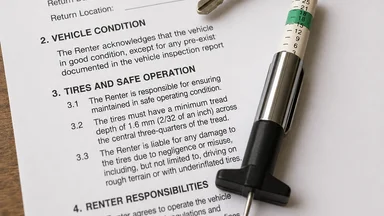
The pre-rental inspection form is a standard document at rental counters. An employee walks around the vehicle, notes existing damage on a diagram, and records tire tread depth using a gauge. The renter signs a copy, often under time pressure. In the case at issue, the form showed all four tires at 5/32nds when the renter picked up the car. When the claim was filed, the insurer obtained a copy from the rental company's system that listed the front tires at 3/32nds. The discrepancy became the centerpiece of the denial letter.
The renter's attorney argued that the log must have been edited after the accident because the renter had driven the car less than 200 miles and tire wear does not degrade that quickly. The insurer countered that the original inspection could have been incorrect or that the renter might have swapped tires. Without a timestamped digital photo of the gauge reading, the dispute came down to paperwork. The rental company's internal policy required employees to measure tread at every return, but no record of a return inspection existed in this case.
This case is not isolated. A review of complaints filed with the Consumer Financial Protection Bureau (CFPB) shows more than 200 grievances related to rental-car damage waivers over a three-year period, with roughly 15% involving tire-condition disputes. The language in most rental contracts classifies tires as a "maintenance item" that the renter must keep in proper condition. If the insurer can show that the tires were below a specified threshold—often 4/32nds or 5/32nds—the CDW can be voided retroactively.
The burden of proof falls on the renter. Rental companies and their insurers are not required by federal law to retain pre-rental photos, though some states have begun to mandate digital imaging. As of early 2026, only a handful of states—including California and New York—have proposed legislation requiring timestamped photos at pickup and drop-off. Until then, the paper log remains the primary evidence, and its accuracy is difficult to challenge after the fact.
How CDW Products Create a Secondary Liability Trap
Collision damage waiver is not insurance in the regulatory sense. It is a contractual waiver by the rental company of its right to seek reimbursement from the renter for physical damage to the vehicle. Because it is not insurance, it is not subject to state insurance codes in the same way as a personal auto policy. This distinction matters when claims are denied: the renter's recourse is through contract law, not insurance bad-faith statutes.
The CDW product is marketed as a simple opt-in: pay a daily fee—typically between US$10 and US$30—and walk away from any damage liability. The fine print, however, carves out numerous exceptions. Damage from off-road driving, driving under the influence, or violating any term of the rental agreement can void the waiver. Tire wear, as a maintenance item, falls into this category. Some contracts explicitly state that the renter is responsible for "mechanical failures" and "wear and tear," which insurers interpret to include tire tread depth.
The trap is that the renter has no practical way to verify the pre-rental tire condition beyond the paper log. If the log is inaccurate or later altered, the renter bears the cost. The average repair bill for a rental car bumper replacement is around US$1,200 to US$1,800, while a new set of tires can cost US$400 to US$800. In the case of a CDW denial, the renter is on the hook for the full repair, not just the tire replacement.
Rental companies earn significant margin on CDW sales. Industry estimates suggest that the loss ratio—claims paid out relative to premiums collected—hovers around 40% for CDW products. That means for every dollar a renter pays, the rental company keeps roughly 60 cents after covering claims. Denying claims on technicalities improves that ratio. Tire-tread denials are particularly attractive because they are low-cost to investigate—a simple document review—and they occur frequently enough to move the loss ratio.
Regulatory Complaints Show a Pattern of Tread-Depth Denials
The CFPB's consumer complaint database includes entries from renters who describe nearly identical scenarios: a minor collision, a CDW claim, and a denial citing tire condition. One complaint from a Florida renter in 2023 states: "The rental company said my tires were under 4/32nds after I returned the car, but I drove only 50 miles. They refused to show me the inspection log." Another from Texas: "They denied my CDW claim because the tire tread was 3/32nds, but I have photos from pickup showing the tires looked new."
The Federal Trade Commission (FTC) has investigated rental-car add-on products in the past, including CDW, but has not issued specific guidance on tire-tread disputes. In 2026, the FTC's DEI investigation into Diversity Lab LLC demonstrated the agency's willingness to scrutinize business practices, but that inquiry did not extend to rental-car claims. Consumer advocates argue that the FTC should examine whether pre-rental inspection forms are being systematically altered to deny claims.
The Florida Department of Financial Services logged 45 complaints related to rental-car damage waivers in 2024, with tire-tread issues appearing in about a quarter of them. The department's mediation program resolved a few cases by requiring the rental company to produce the original inspection form, but most complaints were closed without action because the renter lacked independent evidence. No state regulator has yet issued a formal bulletin on tire-tread measurement standards.
One challenge for regulators is the lack of a standard industry protocol for when and how tire tread is measured. Rental companies measure tread at pickup, but some use a quick visual check while others use a depth gauge. The timing of the measurement—before the renter drives away or after—can affect the reading. Insurers often rely on the measurement taken at the return, which may reflect wear during the rental period. Without a consistent baseline, disputes are common.
The Economics of Waiving vs. Insuring Collision Damage
The CDW market is a multi-billion-dollar revenue stream for rental companies. Hertz, Avis, Enterprise, and others earn billions annually from these add-ons. The daily fee of US$10 to US$30 can exceed the rental rate itself for economy cars. For a seven-day rental, a CDW can cost US$70 to US$210. If the renter declines, the rental company still has recourse through the renter's personal auto insurance or credit card coverage, but those claims are less profitable because they involve third-party adjusters.
From an insurer's perspective, CDW claims are relatively small—typically under US$5,000—but high volume. Denying a claim on a technicality like tire tread depth saves the insurer the payout and sends a signal to other renters that the waiver is not ironclad. The loss ratio for CDW products, as noted, is around 40%, which is low compared to personal auto insurance loss ratios that often exceed 70%. The gap reflects both the pricing power of rental companies and the effectiveness of exclusion-based denials.
Tire-related denials are a small but meaningful slice of that ratio. Industry data is proprietary, but a former claims manager at a major rental-car insurer told this reporter that tire-tread disputes accounted for roughly 2% to 3% of all CDW denials in 2024. That translates to tens of thousands of rejected claims annually. The cost to the insurer is negligible—a document review takes minutes—while the savings per denial average around US$1,500.
The economics also explain why rental companies resist mandating digital photos. A system that requires timestamped images at pickup and drop-off would reduce disputes but also increase operational costs and slow down the rental process. The industry's trade group, the American Car Rental Association, has argued that current paper logs are sufficient and that additional regulation would harm consumers through higher prices. Consumer groups counter that the current system creates an incentive for fraud.
How a Renter Can Fight a Tread-Depth Denial
For a renter facing a tire-tread denial, the first step is to request a copy of the original pre-rental inspection form from the rental company. Under the contract, the renter is entitled to a copy at the time of rental, but many do not keep it. If the rental company refuses to provide it, the renter can file a complaint with the state attorney general's office or the CFPB. In some cases, the rental company may produce a version that differs from what the renter signed, which can be grounds for a fraud claim.
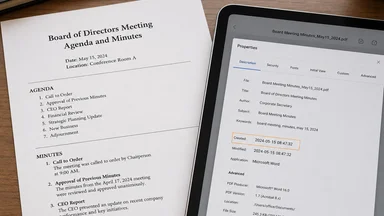
Photo metadata can be a powerful tool. If the renter took pictures of the tires at pickup, the timestamp and geolocation data can corroborate the condition. Even if the renter did not, photographs taken at the scene of the accident may show the tires. A forensic examiner can analyze the metadata to determine if the images were altered. In the case described earlier, the renter's attorney subpoenaed the rental company's server logs to see when the inspection form was last modified. The logs showed an edit two days after the accident, which the insurer could not explain.
Filing a complaint with the state insurance commissioner is another avenue. While CDW is not insurance, the rental company's claims handling may fall under the state's unfair claims practices act if the insurer is licensed. Some states, such as California, have broad consumer protection statutes that apply to any business practice. The commissioner's office can investigate and, in some cases, order the insurer to pay the claim or face fines.
Small claims court is often the most practical remedy. The monetary limits—typically US$5,000 to US$10,000—cover most rental damage claims. The renter can sue the rental company for breach of contract or fraud. The burden of proof is lower than in criminal court, and judges are often skeptical of paperwork-only defenses. A renter who presents a credible timeline and any photographic evidence has a reasonable chance of winning. Many rental companies settle before trial to avoid negative publicity.
Finally, renters should check whether their credit card offers CDW coverage. Most major credit cards—Visa, Mastercard, American Express—provide secondary or primary CDW when the rental is paid with the card. This coverage typically has fewer exclusions than the rental company's waiver and may cover claims denied by the rental company. The renter must file a claim with the credit card issuer within a specified period, often 60 to 90 days. In the tire-tread case, the renter's credit card CDW ultimately paid the repair bill after the rental company's denial, though it took several months of back-and-forth.
What the Next Regulatory Crackdown Might Target
The Federal Trade Commission's 2026 investigation into Diversity Lab LLC, which forced that consultancy to shut down, signals that the agency is active on consumer protection issues. While that case involved employment practices, the FTC's authority under Section 5 of the FTC Act covers unfair or deceptive acts in commerce. Rental-car CDW practices could be next. In 2025, the FTC held a workshop on rental-car add-ons, but no formal rulemaking has followed. Consumer advocates are pressing for a rule that would require rental companies to provide a digital, timestamped photo of the vehicle's condition at pickup and drop-off.
State insurance departments are also taking notice. The National Association of Insurance Commissioners (NAIC) has a working group studying rental-car damage waivers and their impact on consumers. A draft report circulating in early 2026 recommends that states clarify that CDW is a form of insurance and subject to the same unfair claims practices laws. If adopted, that would give renters a stronger legal basis to challenge denials. The NAIC has not yet voted on the report, but it has generated pushback from industry lobbyists.
In California, Assembly Bill 1234, introduced in January 2026, would mandate that rental companies take and retain a digital photograph of each vehicle at the time of rental and at return, with metadata showing the date and time. The bill has passed the Assembly and is pending in the Senate. If enacted, it would be the first law of its kind in the United States. Similar bills have been proposed in New York and Illinois but have not advanced. The rental industry argues that the cost of compliance—estimated at US$50 million annually for the top five companies—would be passed on to consumers through higher rental rates.
The industry's preferred alternative is self-regulation. The American Car Rental Association has developed a voluntary best-practices guide that recommends, but does not require, digital inspection photos. As of mid-2026, only three of the ten largest rental companies have adopted the guide. Critics say self-regulation is insufficient because it lacks enforcement mechanisms. The trade group counters that mandatory digital photos would create privacy concerns and that the current system works for the vast majority of renters.
What is clear is that the tire-tread denial case is not an anomaly but a symptom of a system where the incentives align against the consumer. Rental companies profit from selling waivers and from denying claims. Insurers benefit from low loss ratios. Regulators are only beginning to scrutinize the fine print. Until laws change, renters must treat the pre-rental inspection as a legal document—not a routine formality—and document everything themselves. The burden, for now, remains on the individual.
This article is for informational purposes only and does not constitute legal or insurance advice. Readers should consult a qualified professional for guidance on their specific situation.