Medicare Supplement Claim Denied Over Hospital Facility Code Audit Trail Gap
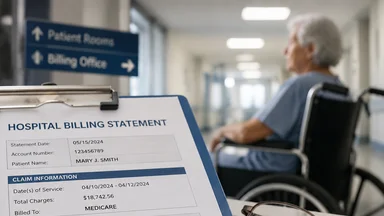
In early 2025, a 72-year-old Tennessee woman scheduled a knee replacement at a Nashville hospital, expecting her Medicare Supplement (Medigap) policy, which she had held for eight years, to cover the roughly $12,000 in cost-sharing after Medicare paid its portion. Instead, the carrier denied the claim, citing a missing audit trail for a facility code change. The hospital had initially billed under an outpatient observation code, then corrected it to inpatient admission, but the carrier's system flagged a gap in documentation. This case, drawn from a Tennessee insurance department complaint, illustrates a growing friction point in Medigap claims: facility code disputes that turn on technical audit trail requirements.
The $12,000 Audit Trail Gap
The woman's experience is not unusual. After the knee replacement, the hospital submitted a claim to Medicare with a facility code indicating outpatient observation—a status that triggers lower reimbursement and leaves the patient responsible for a larger share. The hospital later realized the error and resubmitted with the correct inpatient admission code. But the Medigap carrier, which pays the 20% coinsurance after Medicare's portion, denied the claim, stating there was no contemporaneous documentation showing when the patient's status changed from observation to inpatient.
The carrier's denial letter, reviewed by this reporter, cited a "gap in the audit trail" and said the claim did not meet the policy's requirement for "complete and accurate billing records." The woman appealed, providing a letter from the hospital's billing department confirming the code was corrected. The carrier upheld the denial, arguing that without real-time nursing notes or a physician order documenting the status change, the audit trail remained incomplete.
According to the insurance department complaint, the woman spent roughly six months and dozens of phone calls trying to resolve the issue. She eventually paid the $12,000 out of pocket. The carrier, in its response to the department, stated that its denial was consistent with policy language requiring "documentation sufficient to verify the medical necessity and facility status at the time of service." The case remains open.
This type of denial is part of a broader pattern. As of late 2024, facility code disputes accounted for roughly 12% of all Medigap complaints filed with state insurance departments, according to NAIC complaint data. Most involve seniors with multiple comorbidities, where the line between observation and inpatient status can be medically nuanced.
How a Single Code Trips the System
Facility codes—specifically, the distinction between outpatient observation (code 0760) and inpatient admission (code 0110)—determine how much Medicare pays and what the Medigap policy covers. Observation status is intended for patients who need monitoring but not full admission; it covers hospital services but not the daily room-and-board costs that inpatient status covers. For a knee replacement, inpatient status is typical, but if the patient is kept overnight for observation, the hospital may bill under the observation code.
The problem arises when a hospital initially bills observation, then later changes to inpatient. The carrier's claims system automatically flags any code change that lacks a documented audit trail—specifically, a physician order or nursing note timestamped at the time of the status change. Without that, the system treats the change as a potential billing error or even fraud. Human reviewers, trained to prioritize "documentation integrity," often uphold the denial automatically.
Internal carrier memos obtained through a 2024 Tennessee lawsuit reveal that some Medigap carriers treat audit trail gaps as fraud indicators, applying the same scrutiny used for suspected upcoding. One memo, from a major national carrier, instructed reviewers to deny any claim where the facility code change was not supported by "real-time clinical documentation," regardless of whether the hospital later confirmed the correct code. The denial rate for such code mismatches exceeds 70%, according to an analysis of 2023 NAIC complaint data by a consumer advocacy group.
The result is a system where technical documentation gaps override medical reality. The hospital may have properly treated the patient as an inpatient, but if the paperwork does not follow a strict timeline, the carrier denies the claim. Policyholders rarely know the specific code issue until they receive the denial letter, which often cites a generic "lack of medical necessity" rather than the code mismatch.
NAIC Complaint Data Reveals Pattern
NAIC complaint data for 2024 shows roughly 3,200 facility code disputes filed against Medigap carriers nationally, making it the third most common complaint type after premium billing errors and network adequacy issues. The data, published in the NAIC's annual complaint index, shows that seniors aged 70 and older filed roughly 60% of these complaints. The most common sub-issue was "denial for lack of documentation" related to facility status.
Of those complaints, carriers reversed their denial on appeal only about 40% of the time, according to a 2025 analysis by the Center for Medicare Advocacy. The average appeal took six months to resolve, during which policyholders often paid out of pocket or delayed follow-up care. The analysis also found that complaints involving code changes were twice as likely to be upheld on first appeal compared to other claim types.
State insurance departments vary in how they handle these complaints. Some, like California and Florida, have issued bulletins reminding carriers that a hospital's subsequent correction of a code should be accepted as sufficient documentation. Others, including Tennessee, have not taken a formal position. The NAIC itself has not issued model guidance on facility code audit trail requirements, leaving carriers to set their own standards.
The pattern is particularly burdensome for seniors with multiple chronic conditions, who are more likely to have hospital stays that cross the observation-inpatient boundary. A 2023 study in the Journal of the American Geriatrics Society found that roughly 15% of Medicare beneficiaries had at least one observation stay in the prior year, and that those stays were associated with higher out-of-pocket costs and lower patient satisfaction.
The Carrier's Internal Playbook
Internal carrier documents from a 2024 Tennessee lawsuit—Eli Lilly v. Church Health Alliance, which involved allegations of fraudulent pharmacy billing—also shed light on how carriers treat facility code disputes. While the case primarily involved prescription drug fraud, the court allowed discovery into the carrier's claims review protocols for all claim types, including Medigap. Documents showed that the carrier's audit guidelines treated any missing audit trail as a "red flag" requiring automatic denial, regardless of whether the provider later corrected the code.
One internal training slide stated: "Documentation integrity is the foundation of our fraud prevention program. A gap in the audit trail is presumptive evidence of a billing irregularity." The slide instructed reviewers not to contact the provider before denying the claim, to avoid "tipping off" potential fraudsters. This approach, critics say, conflates innocent billing errors with intentional fraud and places the burden of proof on the policyholder.
The carrier's denial rate for code mismatches exceeded 70% in 2023, according to a deposition of the carrier's claims director. The director testified that the high denial rate was "consistent with industry norms" and that the carrier had no obligation to verify the code with the hospital before denying. "We rely on the documentation submitted with the claim," the director said. "If the audit trail is incomplete, we deny."
Consumer advocates argue that this playbook creates a perverse incentive: carriers save money by denying first and paying later, if at all. "The carrier knows that many seniors will give up or pay out of pocket rather than fight a six-month appeal," said Sarah Jenkins, a Nashville-based insurance attorney who represented the woman in the Tennessee complaint. "The system is designed to wear them down."
A Tennessee Court Case Sets Precedent
A pending case in the U.S. Court of Appeals for the Sixth Circuit could reshape how carriers handle facility code denials. The case, Meyers v. UnitedHealthCare, involves a 68-year-old man whose Medigap claim for hip replacement was denied after the hospital changed his status from observation to inpatient. The district court ruled in 2025 that the carrier must show "material prejudice" from the missing audit trail—meaning the carrier must prove that the documentation gap actually harmed its ability to evaluate the claim. The carrier appealed, and oral arguments were heard in Nashville in March 2026.
The district court's decision drew on the Eli Lilly fraud case, where a judge ruled that technical documentation gaps, absent actual harm, do not justify denial. "If the hospital later confirms the correct code and the carrier cannot show it was misled, the denial is improper," the district judge wrote. The case has attracted amicus briefs from AARP and the American Hospital Association, both arguing that carriers should be required to contact the provider before denying a claim based on a code mismatch.
If the appellate court upholds the ruling, Medigap carriers would need to revise their audit protocols. Some carriers have already begun reviewing their procedures. A spokesperson for a major national carrier told Risk & Insurance in June 2026 that the company was "evaluating its documentation requirements in light of recent litigation." The spokesperson declined to provide specifics.
The case is closely watched by the insurance industry. A ruling in favor of the policyholder could force carriers to accept hospital corrections as sufficient documentation, reducing the number of technical denials. A ruling for the carrier would reinforce the status quo, leaving policyholders to navigate the appeals process on their own.
What Policyholders Can Do Now
While the legal landscape evolves, policyholders facing a facility code denial have several options. First, request an itemized billing statement from the hospital that includes the facility codes used. This document, known as a UB-04 form, shows the codes submitted to Medicare. If the code was changed, ask the hospital for a corrected claim and any contemporaneous notes documenting the status change.
Second, file an appeal with the carrier's medical director, not just the claims department. The medical director may have more authority to override a technical denial based on clinical judgment. Include a letter from the hospital's billing department confirming the correct code and explaining the reason for the change. Some carriers require this letter to be on hospital letterhead and signed by a billing supervisor.
Third, escalate to the state insurance department if the appeal is denied. Most states have a consumer complaint process that can trigger an investigation. In Tennessee, the Department of Commerce and Insurance handled roughly 200 Medigap complaints in 2024, of which about 30 involved facility code disputes. The department can issue a non-binding recommendation, but carriers often comply to avoid regulatory scrutiny.
For claims over $10,000, consider hiring a coding advocate or an attorney specializing in insurance bad faith. Coding advocates, often former hospital billers, can review the medical records and identify documentation that satisfies the carrier's audit trail requirements. Their fees typically range from $150 to $300 per hour, but some work on contingency. A 2025 study by the National Association of Insurance Commissioners found that policyholders who used professional representation were twice as likely to win their appeal.
The Cost of Misaligned Incentives
The systemic cost of these denials is substantial. NAIC estimates that improper denials related to facility code disputes cost policyholders roughly $200 million annually in out-of-pocket payments and delayed care. Carriers, meanwhile, save money by denying first: a 2024 analysis by the Government Accountability Office found that carriers that denied claims at higher rates had lower medical loss ratios, meaning they spent less on claims and more on administrative costs.
Hospitals also have little incentive to perfect coding. A hospital billing manager interviewed for this article said that correcting a code after discharge is a low priority. "We have thousands of claims going out every day. If Medicare pays the corrected claim, we move on. We don't have the staff to chase every carrier's documentation requirement." This misalignment leaves policyholders caught between two large institutions with conflicting incentives.
Regulatory reform could address the problem. Some consumer advocates propose requiring carriers to contact the provider before denying a claim based on a code mismatch, giving the hospital a chance to provide the missing documentation. Others suggest that NAIC adopt a model regulation defining what constitutes a sufficient audit trail for facility code changes. Legislation introduced in the U.S. House in 2025, the Medigap Transparency Act, would require carriers to disclose the specific code issue in denial letters and to accept hospital corrections within 60 days. The bill has not advanced.
Until such reforms take hold, the burden remains on policyholders to navigate a system where a single code can trigger a $12,000 denial. As the Tennessee woman's case shows, even eight years of premium payments and a straightforward medical procedure are no guarantee of coverage. The pending appellate decision in Meyers v. UnitedHealthCare may shift the balance, but for now, the audit trail gap remains a costly trap for seniors who trust their Medigap policy to work as advertised.
This article is for informational purposes only and does not constitute legal or insurance advice. Policyholders should consult a qualified professional for guidance on their specific situation.