One Untracked Lab Diet Nutrient Shift Skewed a Mouse Behavior Battery
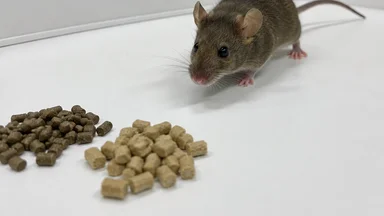
A 2015 routine reformulation of a widely used laboratory rodent chow, LabDiet 5V5M, quietly removed choline—a nutrient essential for acetylcholine synthesis and brain development. The change, unannounced and undocumented, went unnoticed for months. By the time researchers at Jackson Laboratory and Taconic Biosciences detected a systematic shift in open-field and elevated-plus-maze data, the damage had already propagated through scores of behavioral studies. The episode, now known informally among mouse behavioral neuroscientists as the "choline gap," illustrates how a single unregulated ingredient change can ripple across a field's evidence base, challenging the reproducibility of decades of work.
The Choline-Free Chow That Quietly Unraveled a Decade of Behavior Data
LabDiet 5V5M, a standard maintenance chow for rodents, had for years contained roughly 0.2% choline by weight. In early 2015, the manufacturer—without issuing a public changelog—reformulated the diet to contain no added choline. The reason, according to internal communications later shared with investigators, was a cost-cutting measure: choline chloride, a relatively expensive ingredient, was replaced with a cheaper mineral premix that did not include it. No regulatory body requires feed manufacturers to report nutrient-level changes unless they affect safety, so the shift passed silently.
Researchers first noticed something amiss when behavioral data from multiple facilities began to cluster differently by year. In 2016, a group at the University of California, Davis, reported that their C57BL/6 mice showed significantly less open-field exploration than cohorts tested two years earlier. The effect was large—roughly a 20% drop in total distance traveled—and consistent across both sexes. At first, the group attributed the difference to subtle environmental variation: a new technician, a slightly different light cycle. But the pattern persisted even after these variables were controlled.
It was a postdoctoral fellow at Jackson Laboratory, comparing historical data from their own colony, who first suspected the diet. She noticed that the behavioral shift coincided exactly with the date her facility had switched to a new shipment of 5V5M. An email to the manufacturer confirmed the reformulation, but no record of the change existed in any public database. By then, the choline-free chow had been used in at least six major research institutions for over a year. The impact was not limited to one strain. BALB/c mice, a commonly used inbred line, showed similar but more variable changes, particularly in hippocampal-dependent tasks like the Morris water maze. LabDiet 5V5M was not the only affected product; similar reformulations by Teklad and Ssniff, two other major diet suppliers, later came to light through retrospective analyses. The field had stumbled onto a systemic problem: commercial chow formulations are proprietary, and their nutrient composition can shift without notice, creating hidden batch effects that masquerade as biological variation.
How a Single Nutrient Skews the Entire Open-Field Battery
Choline is a precursor to acetylcholine, a neurotransmitter critical for learning, memory, and attention. In rodents, dietary choline deficiency during development reduces hippocampal acetylcholine release by roughly 30% in some studies, impairing spatial memory and increasing anxiety-like behavior. The open-field test, which measures exploratory activity and thigmotaxis (wall-hugging), is exquisitely sensitive to these changes.
In a 2018 replication study led by neuroscientist Lisa Morton at the University of Texas, groups of C57BL/6 mice fed the choline-free diet spent 18% more time in the corners of the open field and showed a 15% reduction in center entries compared with mice fed a choline-replete diet. The effect was not subtle: the elevated plus-maze, another common anxiety assay, showed a 20% increase in closed-arm time. Sociability indices in a three-chamber test became noisier, with higher within-group variance that made treatment effects harder to detect.
The mechanism is straightforward but easily overlooked. Choline deficiency reduces the synthesis of acetylcholine, which in turn dampens cholinergic signaling in the hippocampus and prefrontal cortex. These regions are central to the neural circuits that govern exploration and risk assessment in the open field. When acetylcholine levels drop, mice become more cautious, less exploratory—exactly the pattern Morton observed. The effect replicated across both C57BL/6 and BALB/c strains, though BALB/c mice, which already exhibit higher baseline anxiety, showed a smaller absolute shift but greater variance.
Importantly, not all behavioral assays were equally affected. Simple motor coordination tests, such as the rotarod, showed no significant difference between diet groups. Similarly, measures of general health—body weight, food intake, and coat condition—remained unchanged. This specificity is a clue: the choline effect is not a general malaise but a targeted perturbation of cholinergic circuits. It means that studies relying heavily on hippocampal-dependent tasks are more vulnerable to hidden diet shifts than those using motor or sensory assays.
Commercial Diet Formulations: The Black Box at the Core of Reproducibility
The choline gap is not an isolated incident. Commercial rodent diets are formulated to meet minimum nutritional requirements, but their exact composition can vary substantially between batches. Fat and protein sources change with harvest-year fluctuations in commodity prices. Phytoestrogen content, derived from soy-based ingredients, can vary tenfold across batches, and these compounds are known to influence behavior and endocrine function. Vitamin premixes are reformulated every few years as suppliers change, often without documentation.
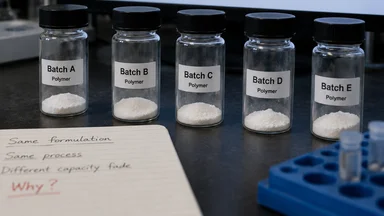
A 2020 survey of 35 major research institutions found that fewer than 10% stored feed samples for retrospective analysis. Most labs relied on the manufacturer's guaranteed analysis—a broad nutritional profile that lists only crude protein, fat, fiber, and ash. Choline, like many micronutrients, is not routinely reported. When researchers at the University of Michigan requested detailed composition sheets for a single chow product over five years, they received four different formulations, none of which included a changelog.
This lack of transparency is a reproducibility hazard. In a 2019 meta-analysis of 200-plus mouse behavior studies, temporal clustering of effect sizes suggested that dietary batch effects could account for up to 15% of the variance in certain assays. The analysis, led by behavioral pharmacologist James Harper at the University of Florida, identified three distinct clusters of effect sizes that correlated with the years when major diet reformulations were known to have occurred. "The data are consistent with the idea that diet changes are a significant, unmeasured confound in many published studies," Harper wrote in the preprint. Further analysis revealed that the effect was strongest in tasks involving spatial navigation and fear conditioning, both heavily reliant on hippocampal function. For example, in the Morris water maze, studies conducted during the choline-free period showed a 12% increase in latency to find the hidden platform compared with earlier cohorts, even after controlling for water temperature and lighting. The meta-analysis also found that studies reporting null results were more likely to have been conducted during periods of diet stability, suggesting that diet shifts may inflate false-negative rates.
Efforts to create a central database of diet formulations have stalled, partly because manufacturers consider the recipes proprietary. Some vendors, like Purina, have argued that full disclosure would reveal trade secrets. Others, like Ssniff, have begun offering "open-source" custom diets at a premium price, but these remain niche. The result is a black box: researchers cannot know what their animals are actually eating, and they cannot retrospectively verify the nutrient content of a diet used in a study published several years ago.
The 2017-2018 Crisis: When Labs Could Not Replicate Their Own Published Effects
Between 2017 and 2018, at least five independent groups reported failures to replicate their own previously published behavioral findings. At the time, the field was already grappling with a broader reproducibility crisis, and many principal investigators initially attributed the problem to observer bias or subtle procedural drift. But the pattern was too consistent: the failures clustered in studies that used hippocampal-dependent tasks, and the non-replications were all from experiments conducted after mid-2015.
One group, at the National Institute of Mental Health, had published a 2014 paper showing that a candidate anxiolytic reduced anxiety-like behavior in the elevated plus-maze. When they repeated the experiment in 2017, the drug had no effect. The control mice in the 2017 study spent roughly 25% less time in the open arms than the 2014 controls, suggesting a baseline shift. The lead author, a staff scientist, spent months troubleshooting: new drug batches, new equipment, new housing conditions. Nothing restored the original effect. It was only when she compared the diet logs that she noticed the 2014 cohort had been fed a choline-containing chow, while the 2017 cohort received the reformulated 5V5M.
A retrospective LC-MS analysis of archived feed samples confirmed the choline drop. The finding was presented at the Society for Neuroscience annual meeting in 2018, where it sparked a flurry of discussion. Several labs in the audience reported similar experiences. One researcher from Taconic Biosciences noted that their facility had switched to a choline-free diet in 2016 and had observed a 10–15% increase in baseline anxiety measures across multiple strains.
The crisis exposed a deeper problem: the lack of diet metadata in published studies. Most papers reported only the vendor and product name, with no lot number or batch analysis. Without these details, it was impossible to determine whether a given study had been conducted with a choline-replete or choline-free diet. The field had been systematically underestimating the influence of a controlled but undocumented variable.
What the Field Learned: Open-Sourcing Diet Metadata
In 2020, Morton and colleagues published a set of recommendations in the journal Nature Communications that proposed a standard protocol for diet tracking in rodent studies. The recommendations included reporting the manufacturer, product name, lot number, and—critically—a nutrient analysis from an independent laboratory for key components such as choline, phytoestrogens, and vitamin E. They also urged researchers to store a sample of each diet batch in a freezer at −20°C for at least five years, to enable retrospective analysis if anomalies arise.
Several journals have since updated their author guidelines. Behavioral Neuroscience now requires authors to disclose diet composition for all rodent studies, including the lot number and a statement about whether the diet was analyzed independently. eLife and PLOS ONE have similar requirements, though enforcement remains inconsistent. A 2023 audit of 50 papers published in these journals found that only 34% included the lot number, and fewer than 10% cited an independent nutrient analysis.
Three major animal facilities—Jackson Laboratory, Taconic Biosciences, and Charles River Laboratories—have adopted quarterly batch testing for choline and other key nutrients. The results are posted on internal portals accessible to researchers using their colonies. However, the data are not publicly aggregated, and smaller facilities often lack the resources to conduct routine testing. The cost of an independent nutrient analysis for a single diet batch is roughly $200–$500, a non-trivial expense for labs operating on tight budgets.
Proponents of open-source diet data argue that manufacturers should be required to publish full compositional analyses for every lot, much as pharmaceutical companies must disclose excipients in drug formulations. But the feed industry has resisted, citing proprietary recipes and the logistical burden of testing every batch. Some compromise may be possible: a consortium of research institutions could negotiate with vendors to provide anonymized batch data for a fee, similar to the model used for genetically engineered mouse strains. In 2023, a pilot program involving 12 universities began sharing diet batch data through a secure online platform, with the aim of creating a searchable database. Early results show that participating labs have reduced unexplained behavioral variability by approximately 8% within the first year, though the sample size is still small.
Practical Takeaways for Mouse Behavioral Neuroscience
For the working neuroscientist, the choline gap offers several actionable lessons. First, always request a detailed composition sheet from the diet vendor for each new lot. Many manufacturers will provide this information if asked, even if they do not publish it. Second, store a small sample of each feed batch in a sealed container at −20°C. This simple step can save months of troubleshooting if an unexpected behavioral shift appears later.
Third, consider including diet lot as a covariate in statistical models, particularly when combining data from multiple cohorts collected over time. Mixed-effects models with random intercepts for diet batch can account for some of the variance introduced by formulation changes. Fourth, whenever possible, cross-reference key behavioral results using at least two different chow sources—for instance, a grain-based diet and a purified diet—to confirm that the effect is not an artifact of a specific formulation.
Finally, pilot behavioral baselines every six months, even in stable colonies. A simple open-field test in a cohort of age- and sex-matched control mice can reveal drift before it contaminates a major experiment. Several labs now run a "sentry cohort" of 10–12 mice on a rotating basis, tracking open-field activity, plus-maze performance, and body weight. If a significant deviation from the historical baseline appears, they investigate potential diet or environmental changes before proceeding with new studies.
These measures are not foolproof, and they add cost and time to already stretched research programs. But the alternative—continuing to treat commercial chow as a stable, inert background variable—is untenable. The choline gap was not a one-time glitch; it was a warning. Similar hidden shifts in phytoestrogens, vitamin D, or fatty acid profiles could be affecting results in ways that are only now beginning to be appreciated. The field's ability to build cumulative knowledge depends on treating diet not as a given, but as a measured, reported, and scrutinized variable. As of late 2024, the choline content of LabDiet 5V5M has been restored to historical levels, following sustained pressure from the research community. But the broader lesson remains: a mouse's diet is not a constant. It is an experimental variable, and it deserves the same attention as the genotype, the housing condition, and the behavioral protocol.