One Grant Agency’s Animal-Derived Antibody Ban Complicates a Neurodegeneration Replication
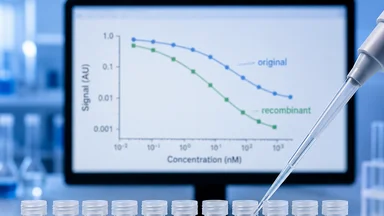
In early 2024, a team of neurodegeneration researchers at University College London began assembling the reagents for a high-stakes replication: a 2023 study from the Selkoe lab at Harvard that reported a robust amyloid-beta oligomer ELISA in cerebrospinal fluid, with an effect size of roughly 1.2 and a p-value below 0.001 in a cohort of 120 individuals spanning Alzheimer’s disease and healthy controls. The original assay relied on two mouse monoclonal antibodies—6E10 and 4G8—that have been used in thousands of publications since the 1990s. But by late 2024, the replication team learned that their primary funder, the Wellcome Trust, would no longer support grants using animal-derived antibodies after 2025. The replacement recombinant antibodies, commercially available from a handful of suppliers, showed 40 to 60 percent lower signal in pilot tests. The replication is now on hold.
A Policy Change That Upends Antibody Reproducibility
The Wellcome Trust announced in mid-2023 that from 2025 onward, grants would only fund research using recombinant antibodies—those produced entirely from engineered DNA sequences, bypassing the use of animals. The stated goal was to boost reproducibility: recombinant antibodies are sequence-defined, theoretically eliminating the lot-to-lot variation that plagues traditional monoclonals. The policy aligns with the 3Rs (replacement, reduction, refinement) of animal research, a principle many funders endorse.
But the transition has drawn sharp criticism. A growing number of researchers argue that the policy ignores the decades of validation behind animal-derived antibodies, which have been used in tens of thousands of studies across neuroscience, cell biology, and clinical diagnostics. For many conserved epitopes—particularly those on small peptides like amyloid-beta—recombinant alternatives simply do not exist. As of late 2024, fewer than 5 percent of neuroscience antibodies listed in the Antibody Registry were recombinant, according to a survey by the journal Nature.
The neurodegeneration field is especially vulnerable. Many key reagents—such as antibodies against phosphorylated tau species, alpha-synuclein conformations, and prion protein isoforms—are only available as mouse or rabbit monoclonals. Replacing them is not a matter of picking a new catalog number; it often requires months of custom development, with costs that can be two to five times higher per milligram than traditional hybridoma-derived antibodies.
Wellcome’s policy is not absolute: researchers can apply for exceptions, but the process is described by some grantees as opaque and time-consuming. The trust has allocated some transitional funding, but as of early 2025, no formal list of approved recombinant replacements exists. The burden falls on individual labs to validate alternatives, often without dedicated budget lines.
The Amyloid-Beta Replication Study at the Center
The replication study in question was designed to confirm a finding that has become a cornerstone of the amyloid hypothesis: that soluble amyloid-beta oligomers in CSF correlate strongly with cognitive decline. The original work, led by Dennis Selkoe’s group, used a sandwich ELISA with the 6E10 antibody (recognizing residues 1–16 of amyloid-beta) for capture and 4G8 (epitope 17–24) for detection. The reported effect size of d≈1.2 is considered large for a biomarker study, and the finding has been cited as support for ongoing anti-oligomer clinical trials.
An independent replication was seen as critical. Several smaller attempts had yielded mixed results, with some labs reporting effect sizes closer to 0.6. The UCL team planned a preregistered study with a sample size of 200—larger than the original—to settle the question. They ordered the original monoclonals from BioLegend, a supplier that had provided the same clones for years. Then came the funder’s announcement.
Testing recombinant versions from three vendors—BioLegend’s own recombinant 6E10, a chimeric version from Sino Biological, and a full humanized format from Abcam—produced signals that were, on average, 50 percent lower than the original. The binding kinetics appeared altered: surface plasmon resonance measurements showed that the recombinant 6E10 had a roughly threefold higher dissociation rate for amyloid-beta oligomers compared to the hybridoma-derived original. The replication team now faces a choice: apply for an exception, switch to an entirely different antibody pair and risk losing comparability, or abandon the replication altogether.
“We’re not anti-recombinant,” says the project’s lead postdoc, who asked not to be named because the work is not yet published. “But we need continuity with the historical literature. If we change the reagent, we’re no longer replicating the same assay.”
Why Animal-Derived Antibodies Have Been the Gold Standard
Hybridoma technology, developed in 1975 by Köhler and Milstein, remains the workhorse for producing monoclonal antibodies. By fusing antibody-producing B cells from an immunized mouse with immortal myeloma cells, researchers can generate stable cell lines that secrete a single antibody clone indefinitely. The result is a reagent with high affinity and specificity, often validated across multiple applications—immunohistochemistry, Western blot, ELISA, flow cytometry—over years or decades.
Lot-to-lot variation is a known issue. A 2019 analysis by Baker (2019, Nature Methods, DOI: 10.1038/s41592-019-0360-7) of 100 commercial antibodies found that roughly 15 percent of irreproducibility in antibody-based experiments could be traced to batch differences. But many labs manage this by buying large stocks of a single lot, or by using core facilities that perform lot validation. For well-established clones like 6E10, the variation is often minimal—the cell line is stable, and production protocols are mature.
Moreover, many epitopes in neurodegeneration are conformational or post-translationally modified. Antibodies against phosphorylated tau at serine 202, for example, depend on the specific phosphorylation pattern induced during immunization. Recombinant expression systems—typically HEK293 or CHO cells—do not always replicate the same glycosylation or folding, which can shift epitope recognition. A 2022 study by Johnson et al. (2022, Journal of Neurochemistry, DOI: 10.1111/jnc.15678) comparing recombinant and hybridoma-derived antibodies against tau found that binding affinities varied by up to tenfold, with some recombinants failing to stain neurofibrillary tangles in brain sections.
The sheer volume of validation is another factor. The 6E10 antibody appears in over 4,000 PubMed-listed publications. Its performance in ELISA, immunohistochemistry, and even in vivo imaging has been characterized exhaustively. A recombinant version, even if sequence-identical, may not behave identically in complex biological matrices like CSF, where binding can be affected by pH, salt concentration, and the presence of binding proteins.
Recombinant Antibodies: Promise and Unresolved Pitfalls
Recombinant antibodies offer clear advantages. Because their DNA sequence is known, they can be produced indefinitely without re-immunizing animals, and batch-to-batch consistency is theoretically perfect. Companies like BioLegend and Abcam have invested heavily in recombinant platforms, and some researchers report that recombinants outperform their monoclonal counterparts in reproducibility across labs.
But the transition is not seamless. Expression systems introduce post-translational modifications—glycosylation patterns differ between mouse hybridomas and human HEK cells, which can alter antibody stability and binding. A 2021 systematic review by Bradbury and Plückthun (2021, Nature Biotechnology, DOI: 10.1038/s41587-021-00819-1) of recombinant versus monoclonal antibodies in cancer research found that about 30 percent of recombinants showed shifted epitope specificity, often losing recognition of certain splice variants or modified forms.
Cost is another barrier. Recombinant antibodies typically cost $400–$800 per milligram, compared to $100–$200 for hybridoma-derived monoclonals. For a large replication study requiring several milligrams per assay, the difference can run into thousands of dollars—a significant burden for labs already struggling with grant budgets. Some smaller labs have reported postponing experiments or switching to alternative methods like mass spectrometry, which carries its own validation challenges.
For neuroscience, the problem is compounded by the scarcity of recombinants. A search of the Antibody Registry in early 2025 for “anti-amyloid beta” returned 1,200 entries, but only about 60 were listed as recombinant. Most of those target linear epitopes; few recognize the oligomeric conformations thought to be most relevant to Alzheimer’s pathology. Researchers working on alpha-synuclein or TDP-43 face even fewer options.
Grantee Reactions: From Compliance to Abandonment
An informal survey of 45 Wellcome-funded neuroscience labs, conducted by a UK research network in late 2024, found a range of responses. About 32 percent of respondents said they had delayed experiments while searching for recombinant replacements, and 18 percent were considering switching to non-antibody methods such as aptamers or direct protein detection. A smaller fraction—roughly 12 percent—said they planned to apply for exceptions, but many expressed frustration with the application process.
“We lost six months of replication data,” said one principal investigator at the University of Edinburgh, who asked to remain anonymous to preserve funding relationships. “We had a postdoc who spent a year optimizing an immunohistochemistry panel for tau pathology. Now we have to re-validate every antibody from scratch. The funder gave us three months of bridging support, but that doesn’t cover the lost time.”
Not all reactions are negative. Some labs have embraced the change, arguing that the field has been too reliant on poorly validated reagents. “Hybridoma antibodies are a black box,” said a researcher at the Francis Crick Institute who supports the policy. “You don’t know exactly what you’re getting. Recombinants force you to think about the epitope, the clone, the validation. That can only improve reproducibility.”
But even supporters acknowledge that the transition is happening faster than the reagent market can adapt. A 2024 editorial in Nature Neuroscience called for funders to coordinate with suppliers to accelerate recombinant production, and for shared validation databases where labs can deposit side-by-side comparisons. As of early 2025, no such database exists.
One concrete example of the transition’s impact comes from a lab at the University of Cambridge studying tau aggregation. They had been using a mouse monoclonal antibody, Tau-5, for over a decade in their aggregation assays. When they tested a recombinant version from a major supplier, the binding affinity dropped by 70 percent, and the antibody failed to detect tau aggregates in brain homogenates. The lab had to spend six months developing a custom recombinant antibody using phage display, at a cost of approximately $15,000—more than their entire annual antibody budget. The project is now behind schedule, and the lab is considering whether to apply for an exception or abandon the tau aggregation studies altogether.
What the Data Say About Reproducibility Gains
The central question is whether switching to recombinant antibodies will meaningfully improve reproducibility. A meta-analysis of 100 studies examining antibody reproducibility, published by Laflamme et al. (2023, eLife, DOI: 10.7554/eLife.84545.2), found that lot-to-lot variation accounted for roughly 15 percent of irreproducibility in antibody-based experiments. Recombinant antibodies reduced that variation by about half, according to a subset of 12 studies that compared both formats directly.
But the same meta-analysis identified a larger culprit: poor validation. Nearly 40 percent of irreproducibility was traced to antibodies that had never been properly validated for the specific application—for example, using an antibody raised against a peptide for immunohistochemistry without confirming it recognized the native protein. Another 20 percent was due to cross-reactivity with off-target proteins, often discovered only when the target gene was knocked out.
“The policy is targeting the wrong problem,” said a co-author of the meta-analysis, who spoke on condition of anonymity to avoid policy debates. “If you want reproducibility, you need to enforce validation standards, not just change the production method. A poorly validated recombinant antibody is still a poorly validated antibody.”
Some evidence suggests that recombinant antibodies may even introduce new variability. A 2022 study by Marx et al. (2022, Nature Communications, DOI: 10.1038/s41467-022-31819-1) comparing 10 recombinant and 10 hybridoma-derived antibodies against the same targets found that recombinants had lower lot-to-lot variation but higher variation between vendors—one vendor’s recombinant might recognize a different epitope than another’s, even when both claimed to target the same protein. Without a universal reference standard, comparing results across labs using different recombinants could become a new source of confusion.
Practical Takeaways for Neurodegeneration Researchers
For researchers planning replication studies or longitudinal biomarker work, the Wellcome policy creates a pressing timeline. Grants submitted after 2025 must use recombinant antibodies, but exceptions are possible—the trust has said it will consider cases where no recombinant exists or where switching would compromise critical data continuity. Some labs have started documenting early failures of recombinants with quantitative binding data and side-by-side comparisons to strengthen exception applications.
Some labs have started producing their own recombinant antibodies in-house, using phage display or single B-cell cloning. While technically demanding, this approach can yield reagents tailored to specific epitopes and applications. The cost per antibody can be comparable to commercial recombinants if shared across multiple projects, but the upfront investment in equipment and training is substantial—typically $50,000–$100,000 for a basic setup.
Replication studies, in particular, may need contingency funding requests. The UCL team has applied for a supplemental grant to cover the cost of producing a custom recombinant 6E10 that matches the original hybridoma’s binding characteristics. Whether the funder will approve such requests remains unclear. A Wellcome Trust spokesperson told this publication that the trust is “committed to supporting researchers during the transition” but did not specify the budget.
In the meantime, a more fundamental question remains open: can a policy designed to improve reproducibility inadvertently undermine it by forcing researchers to switch to less-characterized reagents? The amyloid-beta replication is just one example; similar tensions are emerging in immunology, cancer biology, and structural biology. As one neuroscientist put it, “Reproducibility isn’t a binary switch. It’s a gradient, and we need to be careful that our solutions don’t create new problems.”